After several years of trying to join the admin world, I have finally been successful! As of September 1st, I will be the new Director of Curriculum/Business Administrator for the Gibbsboro School District. I am very excited, to say the least. I have had the opportunity to move things from my classroom into my new "office". It is amazing what one can gather after over twenty years of teaching...
So, this month's topic about creating joy/happiness is very timely. I have spent the last several weeks thinking about how I am going to transition into my new role. There are a lot of new things to learn with both of my new roles. How will I handle not knowing? How will I manage my time? How will I stay on topic of communicating feedback to the teachers? How will I push myself to stay present in every conversation? These are just a few of my thoughts as I sit down to write...
My new district is in year 3 of their standards based grading journey. They have completed eliminated percentages from their practice. This is done in every subject in grades Kindergarten to Eighth grade. I am very excited to be a part of this new adventure, since in my classroom I have been working towards this, in small steps, over the last few years. It is a practice I am completely on board with, because I believe it focuses on what everyone is most concerned with: what the student is learning.
So, I am excited in learning how to support the teachers and staff in reporting this out to our parents and the community. Also, I look forward to helping them create a curriculum that is appropriate, challenging, and fluid for our students. It is easy to get excited about something when you believe in it 100%.
The shift to standards based learning came from the teachers, so it was a "bottom-up" movement. I do know the administration did not attempt to push compliance from the top down. This should help keep everyone motivated on improving the practice instead of it being another top down movement where there would be more resentment.
I believe I can bring joy/happiness into this journey? I believe by doing my best to show the community outside of the school all of the great things that are taking place. Share part of a lesson. Share an interaction that I notice while walking the halls. Get into classrooms. Share. Share. Share. "Because if we do not share our story, someone else will, and we may not like how they tell it."
Monday, July 8, 2019

Tuesday, July 31, 2018
Engagement
While doing some reflecting after a recent interview, I realized I may have answered a particular question too much like a teacher. While this is not a bad thing, I did not see it through an administrator's lense. How I wish I could answer that question again. If I could, this is how I would respond to this question:
Now, I focused my answer around relationships. I mentioned I would check in with the student to see how things were going. I would try and create a mentor type relationship with the student to see if this disengagement was just temporary, or if it would be longer lasting. I would also make sure I would discuss the student with his/ her teachers to see if they noticed what I was seeing regarding this student.
In retrospect, I think I missed the second half of the answer to this question. While I do think my response was good, it only covered half (if that much) of the scenario. I should have included that after discussing the student with his/her teachers, I would have taken the next step(s) to make sure this child did not fall through the cracks. In my school, that would have been referring the student to our TRAC team.
This team is comprised of a member of our Special Ed department, a school counselor, and a couple of teachers. This team makes a call home and requests a meeting with both the parent and the disengaged student. This is an early opportunity for the school to make the connection with home that we are concerned with some recent behaviors or habits we are noticing. Being involved in several of these meetings, it is a great opportunity for the student to realize that we all are looking out for their best interest everyday. In addition, it is a great opportunity to make that positive connection with the home as well. Looking out for their child(ren) is always a great message to send.
Now, this TRAC referral requests a follow up meeting in a bout a month to see if the behavior or habits have been positively adjusted. If so, then there is no further action required from the committee. As an administrator, I would still keep that student on my "unofficial" list to check-in on frequently to make sure things are still going smoothly.
What happens if the slide did not stop? Then during the next meeting with the family, the committee could recommend a variety of things: a meeting with the child study team to see if testing is needed, a placement in our Basic Skills group if needed, and/or a chance to speak with a counselor if need be. The list could be longer depending on the student. We may also recommend several of these if it is required.
I think the part I missed in my earlier answer was the chance to show that I may not have all the answers and will use all of the resources at our disposal to help all of our students achieve their best. I believe I left my answer as too self-centered. I did not show my ability to be a team player enough in my response. When it comes to the success of our students, we must be willing to work with everyone to get them to be their best!!

- While visiting classrooms one day, you notice the same student not fully engaged in his/her learning. What do you do?
Now, I focused my answer around relationships. I mentioned I would check in with the student to see how things were going. I would try and create a mentor type relationship with the student to see if this disengagement was just temporary, or if it would be longer lasting. I would also make sure I would discuss the student with his/ her teachers to see if they noticed what I was seeing regarding this student.
In retrospect, I think I missed the second half of the answer to this question. While I do think my response was good, it only covered half (if that much) of the scenario. I should have included that after discussing the student with his/her teachers, I would have taken the next step(s) to make sure this child did not fall through the cracks. In my school, that would have been referring the student to our TRAC team.
This team is comprised of a member of our Special Ed department, a school counselor, and a couple of teachers. This team makes a call home and requests a meeting with both the parent and the disengaged student. This is an early opportunity for the school to make the connection with home that we are concerned with some recent behaviors or habits we are noticing. Being involved in several of these meetings, it is a great opportunity for the student to realize that we all are looking out for their best interest everyday. In addition, it is a great opportunity to make that positive connection with the home as well. Looking out for their child(ren) is always a great message to send.
Now, this TRAC referral requests a follow up meeting in a bout a month to see if the behavior or habits have been positively adjusted. If so, then there is no further action required from the committee. As an administrator, I would still keep that student on my "unofficial" list to check-in on frequently to make sure things are still going smoothly.
What happens if the slide did not stop? Then during the next meeting with the family, the committee could recommend a variety of things: a meeting with the child study team to see if testing is needed, a placement in our Basic Skills group if needed, and/or a chance to speak with a counselor if need be. The list could be longer depending on the student. We may also recommend several of these if it is required.
I think the part I missed in my earlier answer was the chance to show that I may not have all the answers and will use all of the resources at our disposal to help all of our students achieve their best. I believe I left my answer as too self-centered. I did not show my ability to be a team player enough in my response. When it comes to the success of our students, we must be willing to work with everyone to get them to be their best!!
Friday, July 27, 2018
Data Analysis
The next area I am going to reflect on is Data Analysis in preparation for that first administrative job. Now, I happen to have experience in this area in the current school where I teach. We are a small prek-8 public school in New Jersey. I had the opportunity to pick up several administrative roles over the last several years, and data analysis was one of them.
I had the task of taking the returned state test scores and putting together a presentation for the Superintendent. This presentation would have the current scores along with the scores from the last few years. This allowed us to track a group over several years across several teachers and of course how the students fared certain teacher's classes. I was able to do this while still being a member of our association because I was always professional while handling the information in front of me.
In addition, we were able to dig deeper into the numbers as well. I am a systems guy. Meaning, I do not blame people (students included) without first looking at the systems/procedures/resources in place first. In my presentation, I was able to show that over the last few years, for example, our students scored low in working with nonfiction writing. Before blaming the teachers on why this was not being taught, I asked if they felt they had adequate resources to implement this more for next year. Also, I wanted to see if there was a need for an in-service or professional development to assist in this area.
When it came to math, we noticed that students were stumbling over some of the higher level thinking questions. We did a nice job when the problems were given to the students, but the numbers showed we needed guidance on how to push high order thinking skills in math. Now, we had the two main topics that would push out Professional Learning Communities the following year: working with non-fiction in ELA and creating higher order tasks in math.
In addition to the state tests, we also took the MAP tests. I was involved in assisting teachers with analyzing the results from those tests as well. This was different because it gave me a chance to work with teachers from each grade level. The scores showed us strands certain students needed additional work on, so we worked in conjunction with our Basic Skills teachers to help the students get caught up. This would either be done in class in small groups or as pull outs, depending on scheduling.
I enjoy this part of the job. I like see results from assessments and praising the teachers and students on the areas we did really well in. Also, the numbers can help us focus in on the areas that need improvement as well. I always worked on being extremely professional with my colleagues when talking about numbers. I focused our discussion on what the students were learning, never about what the teacher was or was not doing. The learning is the focus. That is the only way to strive to improve achievement throughout the school.

I had the task of taking the returned state test scores and putting together a presentation for the Superintendent. This presentation would have the current scores along with the scores from the last few years. This allowed us to track a group over several years across several teachers and of course how the students fared certain teacher's classes. I was able to do this while still being a member of our association because I was always professional while handling the information in front of me.
In addition, we were able to dig deeper into the numbers as well. I am a systems guy. Meaning, I do not blame people (students included) without first looking at the systems/procedures/resources in place first. In my presentation, I was able to show that over the last few years, for example, our students scored low in working with nonfiction writing. Before blaming the teachers on why this was not being taught, I asked if they felt they had adequate resources to implement this more for next year. Also, I wanted to see if there was a need for an in-service or professional development to assist in this area.
When it came to math, we noticed that students were stumbling over some of the higher level thinking questions. We did a nice job when the problems were given to the students, but the numbers showed we needed guidance on how to push high order thinking skills in math. Now, we had the two main topics that would push out Professional Learning Communities the following year: working with non-fiction in ELA and creating higher order tasks in math.
In addition to the state tests, we also took the MAP tests. I was involved in assisting teachers with analyzing the results from those tests as well. This was different because it gave me a chance to work with teachers from each grade level. The scores showed us strands certain students needed additional work on, so we worked in conjunction with our Basic Skills teachers to help the students get caught up. This would either be done in class in small groups or as pull outs, depending on scheduling.
I enjoy this part of the job. I like see results from assessments and praising the teachers and students on the areas we did really well in. Also, the numbers can help us focus in on the areas that need improvement as well. I always worked on being extremely professional with my colleagues when talking about numbers. I focused our discussion on what the students were learning, never about what the teacher was or was not doing. The learning is the focus. That is the only way to strive to improve achievement throughout the school.
Wednesday, July 25, 2018
Instructional Leader #2
As mentioned in the previous post, I am in pursuit of that illusive first administrative position. After watching a couple of videos by Principal Kafele (here is the link to one of the videos), I have been challenged to take some time and think back to the various questions I have been asked in over the 15-20 interviews I have been on over the last few years. Honestly, it might be more, but you lose count after a while.
I first looked at Discipline in my earlier post, since that "could" be a major focus of an Assistant Principal's job. However, today, I am going to take some time to collect my thoughts on a topic that I feel is more important that maintaining Discipline: Raising Student Achievement. I understand the students can not learn unless they are safe and secure. I know the school's culture is immediately impacted if a school does not maintain some kind of order in the building.
After some thought, I have reflected on why we are in schools to begin with. In my opinion, we are there to get students to learn. Period. Whatever the program, method, pedagogy, or resources. We are expected to have our students learning and challenging themselves. That is where my role as Instructional Leader #2 comes in.
My job is to help/assist in creating a culture where learning is paramount for every student. That is why I believe that assisting all teachers on improving their classroom instruction is so important. Regardless of the number of years they have been teaching, improvement is reachable. It is the only way we keep pushing our school forward, by challenging ourselves to constantly improve the instruction in the classroom.
How can that be done? By being visible and accessible. As the Instructional Leader #2, I need to be in classrooms everyday to witness first hand what is going on the classrooms. I can not possibly begin a discussion with a teacher about improving strategies or methods without having been in the room to begin with. Also, I want to create a collegial relationship with the people I am responsible for supervising. Being visible, accessible, and helpful is a great way to start that important relationship.
The observation process is a way to document the improvement of the instruction in the classrooms. I understand that I will be involved in many discussions with teachers about lessons that I observed. I think it is important in the pre-conference meeting to specifically discuss what the teacher feels I should focus the observation on. It would make sense if there are maybe 3-5 main things I am looking for, that two of them would come from their improvement plan from the previous year. In my experience, teachers are asked to submit an improvement plan to help guide them for the next year. I would think that would be a great place to begin our discussion on what the observation will be centered on. This should be familiar to the educator considering they submitted it at the end of the previous year.
After spending time in the room, feedback on the lesson must be timely. I need to make sure I have that conversation soon after spending time in the classroom. The discussion needs to be centered on the agreed topics from the pre-conference meeting. I will be interested to hear the answers to these questions: What did you notice? What went well? If you could reteach this lesson, how would you do it differently? What are you going to do tomorrow to build off of today's lesson? How will you determine that the students did learn the topics?
The process of constantly trying to improve ourselves is critical to a thriving school community. Pushing each other to improve our instruction creates a culture of learning that helps raise student achievement. Knowing that they are supported, guided, and cared for will hopefully have more teachers trying different ways to get students to learn more. Who wouldn't want to work in a school like that?

I first looked at Discipline in my earlier post, since that "could" be a major focus of an Assistant Principal's job. However, today, I am going to take some time to collect my thoughts on a topic that I feel is more important that maintaining Discipline: Raising Student Achievement. I understand the students can not learn unless they are safe and secure. I know the school's culture is immediately impacted if a school does not maintain some kind of order in the building.
After some thought, I have reflected on why we are in schools to begin with. In my opinion, we are there to get students to learn. Period. Whatever the program, method, pedagogy, or resources. We are expected to have our students learning and challenging themselves. That is where my role as Instructional Leader #2 comes in.
My job is to help/assist in creating a culture where learning is paramount for every student. That is why I believe that assisting all teachers on improving their classroom instruction is so important. Regardless of the number of years they have been teaching, improvement is reachable. It is the only way we keep pushing our school forward, by challenging ourselves to constantly improve the instruction in the classroom.
How can that be done? By being visible and accessible. As the Instructional Leader #2, I need to be in classrooms everyday to witness first hand what is going on the classrooms. I can not possibly begin a discussion with a teacher about improving strategies or methods without having been in the room to begin with. Also, I want to create a collegial relationship with the people I am responsible for supervising. Being visible, accessible, and helpful is a great way to start that important relationship.
The observation process is a way to document the improvement of the instruction in the classrooms. I understand that I will be involved in many discussions with teachers about lessons that I observed. I think it is important in the pre-conference meeting to specifically discuss what the teacher feels I should focus the observation on. It would make sense if there are maybe 3-5 main things I am looking for, that two of them would come from their improvement plan from the previous year. In my experience, teachers are asked to submit an improvement plan to help guide them for the next year. I would think that would be a great place to begin our discussion on what the observation will be centered on. This should be familiar to the educator considering they submitted it at the end of the previous year.
After spending time in the room, feedback on the lesson must be timely. I need to make sure I have that conversation soon after spending time in the classroom. The discussion needs to be centered on the agreed topics from the pre-conference meeting. I will be interested to hear the answers to these questions: What did you notice? What went well? If you could reteach this lesson, how would you do it differently? What are you going to do tomorrow to build off of today's lesson? How will you determine that the students did learn the topics?
The process of constantly trying to improve ourselves is critical to a thriving school community. Pushing each other to improve our instruction creates a culture of learning that helps raise student achievement. Knowing that they are supported, guided, and cared for will hopefully have more teachers trying different ways to get students to learn more. Who wouldn't want to work in a school like that?
Friday, July 20, 2018
Equity Discipline
Ok, I admit. It has been way too long. I was embarrassed when I saw the date of my last post: 07/17. I can not believe it has been a year. I could blame it on my frustration over the current state of politics, but I know that is just an excuse. I am sitting down to write to help clarify my thinking on a number of topics I have faced while interviewing for a Principal or Assistant Principal position. So, this post will have a slightly different feel to it. I am writing this more for myself than for a particular audience. I am trying to stop and reflect on the different answers I have given over the years (yes, years!) I have been trying to land that new administrative job.
During one scroll through my Twitter feed, I came across someone mentioning a video by Principal Kafele (@PrincipalKafele) on You Tube where he discusses "points to consider for the aspiring Assistant Principal". Since I am still searching for my first admin job, I figured I would check it out. If you are in the same boat as me, I would take the time to see both videos: Part 1 and Part II.
So that I do not spend this whole past reviewing the videos, I am going to focus on the part of the video where he discusses knowing your Discipline Plan. As a classroom teacher for over 20 years, I know what I do in my classroom, but I wanted to spend some time reflecting on how that might be implemented building wide.
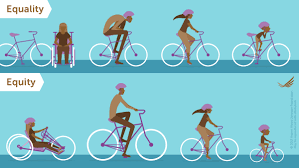
Most of the interviews I have been on there was a question about having a discipline philosophy. I have had the opportunity of being my school's disciplinarian for a couple of years, so I have some experience to help myself answer that question. What was eye opening for me was the constant perception of equity vs. equality in the discipline that I handed out. There were several colleagues that were very vocal about why I did not give a particular student a certain discipline based on the handbook. I found this role contained more grey areas than I realized. What I ended up doing was basing the consequences of the discipline on a case by case basis. There were so many things to consider: is this student being written up for something he/she can not control (IEP)? What is the back story of the incident? Would this student benefit from getting involved in Peer Mediation? Should this student by directed to a Counselor to speak with? Obviously, I want the student to stop that negative behavior, but ideally I want them to stop not out of fear of the punishment, but because they understand it is the right way to act. Now, how do you put all of that into a nice answer to an interview question?
I understand that student discipline is closely linked to school climate and culture, but I am saving that for another post. It will not be a year from now. Principal Kafele challenged anyone who watched the videos that if they are not seriously thinking about their answers, that they are not hungry enough. That was all the motivation I needed. I am not sure which of the other 19 "nuggets" he suggested I will tackle next. Thank you for allowing me some space to work through my thoughts.
During one scroll through my Twitter feed, I came across someone mentioning a video by Principal Kafele (@PrincipalKafele) on You Tube where he discusses "points to consider for the aspiring Assistant Principal". Since I am still searching for my first admin job, I figured I would check it out. If you are in the same boat as me, I would take the time to see both videos: Part 1 and Part II.
So that I do not spend this whole past reviewing the videos, I am going to focus on the part of the video where he discusses knowing your Discipline Plan. As a classroom teacher for over 20 years, I know what I do in my classroom, but I wanted to spend some time reflecting on how that might be implemented building wide.
Most of the interviews I have been on there was a question about having a discipline philosophy. I have had the opportunity of being my school's disciplinarian for a couple of years, so I have some experience to help myself answer that question. What was eye opening for me was the constant perception of equity vs. equality in the discipline that I handed out. There were several colleagues that were very vocal about why I did not give a particular student a certain discipline based on the handbook. I found this role contained more grey areas than I realized. What I ended up doing was basing the consequences of the discipline on a case by case basis. There were so many things to consider: is this student being written up for something he/she can not control (IEP)? What is the back story of the incident? Would this student benefit from getting involved in Peer Mediation? Should this student by directed to a Counselor to speak with? Obviously, I want the student to stop that negative behavior, but ideally I want them to stop not out of fear of the punishment, but because they understand it is the right way to act. Now, how do you put all of that into a nice answer to an interview question?
I understand that student discipline is closely linked to school climate and culture, but I am saving that for another post. It will not be a year from now. Principal Kafele challenged anyone who watched the videos that if they are not seriously thinking about their answers, that they are not hungry enough. That was all the motivation I needed. I am not sure which of the other 19 "nuggets" he suggested I will tackle next. Thank you for allowing me some space to work through my thoughts.
Tuesday, July 25, 2017
Summer Learning

I am embarrassed to admit it has been over 5 months since I last posted on this blog. I have still spent a lot of time reading great ideas from a long list of other bloggers, but fell out of the routine of publishing anything of my own. Well, leave it to #compelledtribe to get me "nudged" in the right direction.
Which is surprising because I have found over the years that I am very much a creature of habit. I spend most of my "free time" to get my exercise in for the day. Even if it means setting the alarm when the first number is a 4. I have found that through hard work, what starts off as hard becomes easy to adjust to while maintaining a routine. I find running, biking, and lifting weights to be great examples of this. Now, if I can take the time to push myself the same in this writing challenge I have created for myself...
We have been asked to spend some time sharing on our summer reading/learning for #compelledtribe. I have read several books (currently reading one on the early 1970s Oakland As) this summer, but there are two that I have learned a great deal from: Work Rules by Laszlo Bock and Hacking Google for Education by Scott Rocco, Billy Krakower, and Brad Currie. The first book I was not expecting to get so much out of, but did. The second one was filled with great ideas I could implement tomorrow (which I knew ahead of time).
Work Rules is written by the head of Google, Laszlo Bock. The one huge takeaway from this book was the simplicity that explained the philosophy that permeates through Google: Mission. Transparency. Voice. That simple message was a lightbulb moment for me. Being a math teacher, I am always looking for ways to break down difficult concepts so my students can better understand them. I found Bock's message had that same impact on me. I believe this to be a simple message that all educators should embrace. If we focused on these three things, imagine the impact we could have on our classrooms, schools, and districts. I highly recommend this book.
Hacking Google for Education was full of great "Hacks" for schools and districts that use GAFE. I have to admit, there were a few that I already used, but I learned new ways to use Google Maps, Google Calendar, and add-ons to help speed up my responses to emails. I am a big fan of the entire Hack Learning Series, and this book did not disappoint. I also highly recommend this book.
So, I hope you found two new books to add to your reading list. I am hoping I can find a couple more to share with you. Also, I am hoping to develop a new routine of writing and reflecting over the next couple of weeks. Again, thanks #compelledtribe for the motivation to get back at this writing thing.
Sunday, February 12, 2017
Competition and Collaboration
Competition is good. Competition is needed. Yes, you can have competition and collaboration at the same time. That is what separates the okay teams from the great ones.
I have been an athlete my entire life. In my experience, competition is what pushes athletes to do better and be better. That constant push to get better takes a drive that is inside every competitive person.
Having said that, my entire athletic life has been on teams. I have never competed in anything on an individual basis. So, to me, working together (collaboration) is a necessity for teams to achieve their goals. It is about sacrificing individual stats for the betterment of the team.
When does it go awry? When people are more focused on themselves over the team. Think about teams that you have heard described as having "that it factor". To me, that factor is a collective understanding that the success of everyone is far more important than the individual. As the famous saying goes: "The name on the front of the jersey is more important than the name on the back of it."
Collaboration helps people push towards a common goal while sharing resources and talents. A great team is a tremendous example of this.
Competition is good. Competition is needed, but it must be the kind that keeps the focus on improving the team first, the individual second.
I have been an athlete my entire life. In my experience, competition is what pushes athletes to do better and be better. That constant push to get better takes a drive that is inside every competitive person.
Having said that, my entire athletic life has been on teams. I have never competed in anything on an individual basis. So, to me, working together (collaboration) is a necessity for teams to achieve their goals. It is about sacrificing individual stats for the betterment of the team.
When does it go awry? When people are more focused on themselves over the team. Think about teams that you have heard described as having "that it factor". To me, that factor is a collective understanding that the success of everyone is far more important than the individual. As the famous saying goes: "The name on the front of the jersey is more important than the name on the back of it."
Collaboration helps people push towards a common goal while sharing resources and talents. A great team is a tremendous example of this.
Competition is good. Competition is needed, but it must be the kind that keeps the focus on improving the team first, the individual second.
Friday, February 3, 2017
10 Things I Wish Admin Knew
After reading a post by Rich Czyz from 4 o'clock faculty about 10 Things I Wish Teachers Knew, I started thinking about 10 things that I wish Admin knew. After some thought, here is what I have as my list:
1. If you add something to my plate, please remove something as well.
2. Just a small bit of recognition goes a long way.
3. Support me in public and I will run through a wall for you.
4. I secretly feel like a scolded student when asked to report to your office.
5. I lose sleep over failing students.
6. Please respect the chain of command. Have parents speak to me first about issues in my classroom.
7. I have very little "free" time during school hours. Or after school for that matter...
8. I want Professional Learning days to excite and motivate me.
9. I am a learner as well. Sometimes it takes me a while to learn new tech/methods. Have the same patience with me as you want me to have with my students.
10. All I really want is what's best for my students as well. And I am exhausted from doing that...
Did I leave anything out? What would you add? Many thanks to Rich for getting me thinking about this...
1. If you add something to my plate, please remove something as well.
2. Just a small bit of recognition goes a long way.
3. Support me in public and I will run through a wall for you.
4. I secretly feel like a scolded student when asked to report to your office.
5. I lose sleep over failing students.
6. Please respect the chain of command. Have parents speak to me first about issues in my classroom.
7. I have very little "free" time during school hours. Or after school for that matter...
8. I want Professional Learning days to excite and motivate me.
9. I am a learner as well. Sometimes it takes me a while to learn new tech/methods. Have the same patience with me as you want me to have with my students.
10. All I really want is what's best for my students as well. And I am exhausted from doing that...
Did I leave anything out? What would you add? Many thanks to Rich for getting me thinking about this...
Sunday, January 22, 2017
Now, I Get It!!
I want to apologize in advance. I do not know how much of this post will discuss education, teaching strategies, project based learning, or my aspirations to one day be a principal. This being said, I would like to use this space to iron out frustrations, stresses, and/or questions that have been bouncing around in my head since Election Day. I promise, this is not a rant about any one particular candidate. I will not be discussing my political beliefs much at all, I think. I just need some place to mull some things over...
I was in church this morning, and the priest began his sermon mentioning that this week is a week celebrated as "Unity Week" throughout the Christian Church. Everyone in the pews began shaking their heads in mutual agreement. Unless you have been living under a rock, everyone has noticed how things are very unified right now. We are more divided now than at any point I can remember.
He referenced the two readings and the Gospel, which he weaved his vast knowledge of Christianity with real life examples I could absolutely relate to. Then, he began to talk about a show he loves to watch. He mentioned that this family does not always get along, but every Sunday they make sure they share a meal together. Why do they do this, he asked? Were they obligated as family to do this? Were they being forced? He definitely had my attention....
What was it that brought them to the table every Sunday? It was a respect for each other. It was a belief in something bigger than themselves that guided them. Sure, they quarreled. Yes, they fought. Yes, they had disagreements. But what did they make sure they could do? Respect each other. This is where I had my "Ah-ha" Moment.
See, the last few months, I have not been a good listener. I have not given people a chance to explain why my choice for President would not work; why theirs might be better. I would not listen to people at all. I was so dead-set in my own beliefs that I could not see anyone else's. What example was I setting for my kids (both at home and in my classroom?) Wasn't I always talking to them about Atticus Finch and "walking a mile in someone else's shoes?" I was not being very respectful. I was acting like a child who was not getting their way.
I left church today feeling like a weight had been lifted off of me. Being that angry all the time was weighing me down. I resolved to be a better listener. I am no longer going to assume my beliefs are innately better than others. I resolve to be more respectful. I harp on my students all the time about this idea. We may not agree with others, but they are still people, and they deserve to be treated with respect. So do their ideas, arguments, and rationales.
Needless to say, I left church seeing things differently today. I am glad the Priest took it upon himself to stress the respect angle, and how it effects unity. Here's to hoping I can continue on the same track. We will never come together if we can not respectfully disagree. Thank you for allowing me this space to work through these feelings. Looking forward to a productive, a lot calmer, week. Be the change you want to see in the world.

I was in church this morning, and the priest began his sermon mentioning that this week is a week celebrated as "Unity Week" throughout the Christian Church. Everyone in the pews began shaking their heads in mutual agreement. Unless you have been living under a rock, everyone has noticed how things are very unified right now. We are more divided now than at any point I can remember.
He referenced the two readings and the Gospel, which he weaved his vast knowledge of Christianity with real life examples I could absolutely relate to. Then, he began to talk about a show he loves to watch. He mentioned that this family does not always get along, but every Sunday they make sure they share a meal together. Why do they do this, he asked? Were they obligated as family to do this? Were they being forced? He definitely had my attention....
What was it that brought them to the table every Sunday? It was a respect for each other. It was a belief in something bigger than themselves that guided them. Sure, they quarreled. Yes, they fought. Yes, they had disagreements. But what did they make sure they could do? Respect each other. This is where I had my "Ah-ha" Moment.
See, the last few months, I have not been a good listener. I have not given people a chance to explain why my choice for President would not work; why theirs might be better. I would not listen to people at all. I was so dead-set in my own beliefs that I could not see anyone else's. What example was I setting for my kids (both at home and in my classroom?) Wasn't I always talking to them about Atticus Finch and "walking a mile in someone else's shoes?" I was not being very respectful. I was acting like a child who was not getting their way.
I left church today feeling like a weight had been lifted off of me. Being that angry all the time was weighing me down. I resolved to be a better listener. I am no longer going to assume my beliefs are innately better than others. I resolve to be more respectful. I harp on my students all the time about this idea. We may not agree with others, but they are still people, and they deserve to be treated with respect. So do their ideas, arguments, and rationales.
Needless to say, I left church seeing things differently today. I am glad the Priest took it upon himself to stress the respect angle, and how it effects unity. Here's to hoping I can continue on the same track. We will never come together if we can not respectfully disagree. Thank you for allowing me this space to work through these feelings. Looking forward to a productive, a lot calmer, week. Be the change you want to see in the world.
Wednesday, December 7, 2016
Professional Learning
Professional Learning is something we have all participated in at some point during our educational careers. Unfortunately, it is usually associated with a dreadful experience for anyone who has to attend. Some teachers save their sick time so they do not have to attend these sessions. Others bring something else to do during that time: grade papers, read a book, check their phone, or doodle on the agenda given when one enters the space. Learning is actually the furthest thing on the minds of the people in the crowd.
Why is this? Why do most educators dread attending what is suppose to help them improve? Usually, it is because the topics are not relevant. It is apparent that the topic for this "day of learning" is just something that must be completed. It is in no way going to help us improve as teachers. It is just something that needs to be done so someone higher up can check off that their district covered this topic. It is quite obvious that there will not be an opportunity to have any follow up at a later time. The attendees never feel connected to what is being discussed, so there is minimal learning actually going on.
I always kept the above scenario in mind when I planned sessions where I was presenting something to my colleagues. I understood that they wanted to leave a session with something they can use the very next day. They want something tangible. They want to be able to work through a process, scenario, or new technology that will ultimately better them as educators. They want interaction. They want to discuss the topic with the people around them. Share ideas. Question. Think. Share.
The funny thing is, I wonder how many of these teachers allow their students to learn the same way. How many of them give their students time to work through something before grading it? Do they get a chance to talk through a process. Share with others in the class? Present alternate ways of solving the problem? Learn from a group instead of just the person standing in front of the group?
Yes, I am being a little facetious, but I do not think I am that far off. I have learned over the years that leading teachers through a process is very similar to leading students through a new topic; both want time to work through the kinks. Both want a chance to talk with others, either to check what they have done, or learn from someone else. Lastly, both want to know that they will get a chance to redo something if they find themselves struggling.
In closing, I guess I just find it interesting both teachers and students learn similarly, only the latter group usually gets graded on something shortly after learning it.
Thank you for giving me time to work through this. I have been thinking about this for a while. Please feel free to leave a comment...
Why is this? Why do most educators dread attending what is suppose to help them improve? Usually, it is because the topics are not relevant. It is apparent that the topic for this "day of learning" is just something that must be completed. It is in no way going to help us improve as teachers. It is just something that needs to be done so someone higher up can check off that their district covered this topic. It is quite obvious that there will not be an opportunity to have any follow up at a later time. The attendees never feel connected to what is being discussed, so there is minimal learning actually going on.
I always kept the above scenario in mind when I planned sessions where I was presenting something to my colleagues. I understood that they wanted to leave a session with something they can use the very next day. They want something tangible. They want to be able to work through a process, scenario, or new technology that will ultimately better them as educators. They want interaction. They want to discuss the topic with the people around them. Share ideas. Question. Think. Share.
The funny thing is, I wonder how many of these teachers allow their students to learn the same way. How many of them give their students time to work through something before grading it? Do they get a chance to talk through a process. Share with others in the class? Present alternate ways of solving the problem? Learn from a group instead of just the person standing in front of the group?
Yes, I am being a little facetious, but I do not think I am that far off. I have learned over the years that leading teachers through a process is very similar to leading students through a new topic; both want time to work through the kinks. Both want a chance to talk with others, either to check what they have done, or learn from someone else. Lastly, both want to know that they will get a chance to redo something if they find themselves struggling.
In closing, I guess I just find it interesting both teachers and students learn similarly, only the latter group usually gets graded on something shortly after learning it.
Thank you for giving me time to work through this. I have been thinking about this for a while. Please feel free to leave a comment...
Wednesday, November 16, 2016
Putting the Learning on Them
My math students have been working on creating blogs over the last several weeks. With the help of our computer teacher, we now have all 6th-8th graders with blogger accounts. I have used the last month giving the students weekly activities to work on and post. Currently, the posts are only visible by a couple of administrators. I am hoping to be able to gradually open these up school wide and then fully public. After about a month of having my students working on these, here are some thoughts/reactions:
1. I have learned that many of my students are extremely creative. A little embarrassing to finally see that after working with a kid for over two years.
2. I have had students ask if they could post activities from other classes. I love the fact many of them are using their own time to create a cool blog.
3. Giving feedback is critical on my part. I am constantly reading blogs and giving them feedback on what I see and what I do not see.
4. Trying to keep the feedback away from saying good job, good work, good points. Trying to make it specific as to what I see and do not see.
5. As interesting as the topics are, I still have some that do not complete the activity. Even when given the choice of topics, some choose to not complete it.
6. Teaching digital literacy is constant. It adds more to my plate, but is necessary in today's world.
7. I am hoping the students will use these blogs as digital portfolios when they go to apply to high school. I have relayed that to them.
8. The topics for the blogs have math connections. I try to get them to connect something from another subject with a topic in math that we have covered.
9. I will not tell them what specific connection they should use. They must discover/find them by themselves. If they ask, I try to push them towards things they are interested in.
Overall, I am pleased with the progress of the blogs. I am hopeful that this will branch out to include more viewers for the students. I am interested to see how the work improves when they know more people may view it. Right now, I am the only one that can see the work.
Thank you for giving the space and time to work through my thoughts. I expect these blogs to be helpful to my students as digital portfolios. I am learning what the difference between these two are.
Any suggestions on how I can have my students make the step from "just creating blogs" to creating digital portfolios?

1. I have learned that many of my students are extremely creative. A little embarrassing to finally see that after working with a kid for over two years.
2. I have had students ask if they could post activities from other classes. I love the fact many of them are using their own time to create a cool blog.
3. Giving feedback is critical on my part. I am constantly reading blogs and giving them feedback on what I see and what I do not see.
4. Trying to keep the feedback away from saying good job, good work, good points. Trying to make it specific as to what I see and do not see.
5. As interesting as the topics are, I still have some that do not complete the activity. Even when given the choice of topics, some choose to not complete it.
6. Teaching digital literacy is constant. It adds more to my plate, but is necessary in today's world.
7. I am hoping the students will use these blogs as digital portfolios when they go to apply to high school. I have relayed that to them.
8. The topics for the blogs have math connections. I try to get them to connect something from another subject with a topic in math that we have covered.
9. I will not tell them what specific connection they should use. They must discover/find them by themselves. If they ask, I try to push them towards things they are interested in.
Overall, I am pleased with the progress of the blogs. I am hopeful that this will branch out to include more viewers for the students. I am interested to see how the work improves when they know more people may view it. Right now, I am the only one that can see the work.
Thank you for giving the space and time to work through my thoughts. I expect these blogs to be helpful to my students as digital portfolios. I am learning what the difference between these two are.
Any suggestions on how I can have my students make the step from "just creating blogs" to creating digital portfolios?
Tuesday, October 18, 2016
Hitting the Restart Button
I have to get something off my chest. I was not excited about returning this fall. I was not looking forward to starting my 21st year of teaching. I was not looking forward to getting back to the grind of working with students. Pushing them to be better each day. I was really dragging.
Why? Honestly, because I really thought I was getting a new job. I had interviewed twice for Administrative jobs that I was really excited about getting. Both opportunities provided me with the chance for a final round interview with the Superintendent and other members of the Admin Team. I was so close to landing these jobs, I could taste it.
When I received the phone call with the news I did not get them, I was crushed. Actually, crushed does not truly describe how I felt. I really thought I had an excellent shot at both opportunities. Well, whatever doesn't kill you makes you stronger, right?
What helped to pull me out of my funk? About a week ago I started sending "Good Notes Home" to a few students each day. The emails I sent were nothing spectacular, just a brief note describing the things I saw in class: asking good questions, helping other classmates, doing solid work, etc. I wanted to share with parents a brief snippet of what was going on with their child in my class. We do not see them until late November when we have Conferences.
The feedback I have received from parents has been awesome. They really like the fact that I am taking the time to share the "good stuff" going on in our room. I am not focusing the note on the grade they are receiving. I am focusing on the good habits that I see.
How has this little practice helped me? Actually, it has given me the shot in the arm I desperately needed. Also, it has forced me to look for the good things certain students are doing during the day. It has made my observations intentional so I can share these notes with parents later.
I highly recommend starting this activity. It does not take a lot of time during the day (less than 10 minutes), so there really is no excuse. Usually when teachers reach out to parents it is to share a problem. I still may have to make those calls one day, but I will have started the relationship on a positive note prior to that exchange.
Many thanks to George Couros (@gcouros) and Eric Sheninger (@E_Sheninger) for blogging about the importance of getting rid of the excuses and sitting down to write.
What have you done recently to hit the "restart button"? Please share.

Why? Honestly, because I really thought I was getting a new job. I had interviewed twice for Administrative jobs that I was really excited about getting. Both opportunities provided me with the chance for a final round interview with the Superintendent and other members of the Admin Team. I was so close to landing these jobs, I could taste it.
When I received the phone call with the news I did not get them, I was crushed. Actually, crushed does not truly describe how I felt. I really thought I had an excellent shot at both opportunities. Well, whatever doesn't kill you makes you stronger, right?
What helped to pull me out of my funk? About a week ago I started sending "Good Notes Home" to a few students each day. The emails I sent were nothing spectacular, just a brief note describing the things I saw in class: asking good questions, helping other classmates, doing solid work, etc. I wanted to share with parents a brief snippet of what was going on with their child in my class. We do not see them until late November when we have Conferences.
The feedback I have received from parents has been awesome. They really like the fact that I am taking the time to share the "good stuff" going on in our room. I am not focusing the note on the grade they are receiving. I am focusing on the good habits that I see.
How has this little practice helped me? Actually, it has given me the shot in the arm I desperately needed. Also, it has forced me to look for the good things certain students are doing during the day. It has made my observations intentional so I can share these notes with parents later.
I highly recommend starting this activity. It does not take a lot of time during the day (less than 10 minutes), so there really is no excuse. Usually when teachers reach out to parents it is to share a problem. I still may have to make those calls one day, but I will have started the relationship on a positive note prior to that exchange.
Many thanks to George Couros (@gcouros) and Eric Sheninger (@E_Sheninger) for blogging about the importance of getting rid of the excuses and sitting down to write.
What have you done recently to hit the "restart button"? Please share.
Tuesday, September 27, 2016
Me, An Innovator?
I just finished "The Innovator's Mindset" by George Couros (@gcouros). I am not going to treat this post as a review of the book, maybe that will be at a later date. For now, I really want to focus on one of the discussion questions George posed at the end of the last chapter: "What is one thing that you are going to try immediately to help move closer to a new vision for learning?"
I really like this question for several reasons: One, it asks what is the ONE thing that you can try. This is perfect for me because I have a bad habit of trying too many new things in my class that I never feel like I come close to "mastering" any of them. The second reason I love this question is the word immediately. Again, I usually spend too much time thinking about ways to change my class. I will weigh the pros and cons before deciding on whether it is a go. The bad part of this? By the time I make a decision, I feel like a "new, better version" of something comes along that I want to try.
The focus of this post is on the last word in the above question: learning. I love the word because it does not specify whose learning we are talking about. As I usually view things, I saw it as the learning going on my classroom. The learning going on for everyone in the class. Including myself. What change am I willing to make to help improve the learning for both my students and myself?
Well, this week we began having all 6th through 8th grade students create their own blog through Google Blogger. I am seeing these blogs being used for the students as a place to display their learning and thinking. I am hoping they use if for more than just math. I want them to use this space to display the cool things they try: making videos, podcasts, powerpoints, or just plain writing. The students seemed genuinely excited about setting them up.
I am hoping our students use these platforms as a digital portfolio when they begin to decide where they want to go to high school. I hope they use these portfolios as a symbol of the work and dedication they put into their learning while at our school.
I will be learning more about upgrading my blog right along with them. I am working hard at creating a blog that really reflects my educational beliefs. This is a work in progress, since I really saw a blog as some place to write. George's book really opened up my eyes to the different ways I can use my blog. I am hoping to add these new elements over the next couple of months.
Thank you, George, for creating something that will resonate with a lot of educators. I hope we help to accelerate the learning as we share how impactful this book was to us, and ultimately, our students.

I really like this question for several reasons: One, it asks what is the ONE thing that you can try. This is perfect for me because I have a bad habit of trying too many new things in my class that I never feel like I come close to "mastering" any of them. The second reason I love this question is the word immediately. Again, I usually spend too much time thinking about ways to change my class. I will weigh the pros and cons before deciding on whether it is a go. The bad part of this? By the time I make a decision, I feel like a "new, better version" of something comes along that I want to try.
The focus of this post is on the last word in the above question: learning. I love the word because it does not specify whose learning we are talking about. As I usually view things, I saw it as the learning going on my classroom. The learning going on for everyone in the class. Including myself. What change am I willing to make to help improve the learning for both my students and myself?
Well, this week we began having all 6th through 8th grade students create their own blog through Google Blogger. I am seeing these blogs being used for the students as a place to display their learning and thinking. I am hoping they use if for more than just math. I want them to use this space to display the cool things they try: making videos, podcasts, powerpoints, or just plain writing. The students seemed genuinely excited about setting them up.
I am hoping our students use these platforms as a digital portfolio when they begin to decide where they want to go to high school. I hope they use these portfolios as a symbol of the work and dedication they put into their learning while at our school.
I will be learning more about upgrading my blog right along with them. I am working hard at creating a blog that really reflects my educational beliefs. This is a work in progress, since I really saw a blog as some place to write. George's book really opened up my eyes to the different ways I can use my blog. I am hoping to add these new elements over the next couple of months.
Thank you, George, for creating something that will resonate with a lot of educators. I hope we help to accelerate the learning as we share how impactful this book was to us, and ultimately, our students.
Tuesday, September 13, 2016
Pushing Boundaries
There comes a point in your career when you begin to feel that something needs to change. You begin to slightly resent the mundane things in your routine. You try to challenge yourself to push past this, but you find it hard to let go of that feeling. Why am I not excited about going back? Why am not really looking forward to the school year starting? I was really struggling with these questions as the summer drew to a close.
It was then that I realized I needed to push myself out of my comfort level. I needed to do this to get the excitement back. I needed to do this for my students. If I could force myself to make this change, I would be a better teacher for my students.
Sometime late in the summer, I made the decision to implement a rather innovative (for me) idea. I am asking my students to create something to demonstrate their learning each marking period. I no longer want them to be consumers of knowledge in my class. I want them to be able to take the information and create something new as a result. In doing this, I am hoping to unleash the creativity in my students. By doing this, I am hopeful that my students look at innovative ways to demonstrate their understanding of concepts.
I am really concentrating on this one addition this year. I have a bad habit of getting so caught up in the latest fad, app, or program that I end up trying too many things. Forcing myself to focus on this one activity each marking period will help simplify things a bit. Do I expect this to be easy? Absolutely not. Will there be bumps in the road? Yes. But for me, focusing on this one change was enough to get the juices flowing again. I hope it does the same for my students.

It was then that I realized I needed to push myself out of my comfort level. I needed to do this to get the excitement back. I needed to do this for my students. If I could force myself to make this change, I would be a better teacher for my students.
Sometime late in the summer, I made the decision to implement a rather innovative (for me) idea. I am asking my students to create something to demonstrate their learning each marking period. I no longer want them to be consumers of knowledge in my class. I want them to be able to take the information and create something new as a result. In doing this, I am hoping to unleash the creativity in my students. By doing this, I am hopeful that my students look at innovative ways to demonstrate their understanding of concepts.
I am really concentrating on this one addition this year. I have a bad habit of getting so caught up in the latest fad, app, or program that I end up trying too many things. Forcing myself to focus on this one activity each marking period will help simplify things a bit. Do I expect this to be easy? Absolutely not. Will there be bumps in the road? Yes. But for me, focusing on this one change was enough to get the juices flowing again. I hope it does the same for my students.
Friday, August 12, 2016
Creating a Voice
I have finally done it. I am actually sitting down and forcing myself to write. I am very good at delaying this part of my reflection process. I am constantly thinking about ways to improve my craft. How to deliver a better lesson. How to have my students more engaged. How to put the learning back on them. I absolutely drag my heels when it comes to this part, but I am here. I am trying to work through a change I would like to implement for this school year.
I have spent the summer reading things from Mark Barnes (@markbarnes19) and his #hacklearning community, George Couros' (@gcouros) book: "The Innovator's Mindset", Drew Frank's (@ugafrank) #blogamonth community, and Jonathon Wennstrom's (@jon_wennstrom) #compelledtribe community. Needless to say, my head is always spinning from these great leaders and the information they share and create.
The last word here is what I would like to focus on for this year: creating. I am looking to implement a quarterly activity where I am asking my students to create something to show their learning for the marking period. I am envisioning a self-evaluation process for the marking period. This would give them a constant essential question to ponder: How can I relate (insert learning topic here) to my world? What connections can I make between what I am learning and what I am passionate about?
This is a very early concept that I am still rattling around in my brain, but I am hoping to work through some of it before the start of the school year. I am expecting my students to have a majority of their own voice in the process. I will be available to guide them in their thinking and learning processes.
Some early "hurdles"...
1. We will need to create a list of ways students can show they are learning. See this "list" as an ever evolving Google Doc we can share in Google Classroom.
2. Providing time for students who do not have access at home. This can be solved with lunch time help in my classroom.
3. Reaching out to colleagues to help with technology questions. Or, sitting down with the student myself so we both learn along the way.
4. Guiding students to help them answer their own often used question: "Why do I have to know this?"
5. Managing my time so I can provide quality feedback to students when needed.
6. Not really sure how this is going to end up. I really do not know what kind of final product I am getting.
I really want to have my students creating more in my math classes. I am always looking for ways to not be the hardest working person in the room. I think this will be a nice addition to our classroom this year. Stay tuned for updates on this process...
After reading the list above, am I missing anything? Please share...

I have spent the summer reading things from Mark Barnes (@markbarnes19) and his #hacklearning community, George Couros' (@gcouros) book: "The Innovator's Mindset", Drew Frank's (@ugafrank) #blogamonth community, and Jonathon Wennstrom's (@jon_wennstrom) #compelledtribe community. Needless to say, my head is always spinning from these great leaders and the information they share and create.
The last word here is what I would like to focus on for this year: creating. I am looking to implement a quarterly activity where I am asking my students to create something to show their learning for the marking period. I am envisioning a self-evaluation process for the marking period. This would give them a constant essential question to ponder: How can I relate (insert learning topic here) to my world? What connections can I make between what I am learning and what I am passionate about?
This is a very early concept that I am still rattling around in my brain, but I am hoping to work through some of it before the start of the school year. I am expecting my students to have a majority of their own voice in the process. I will be available to guide them in their thinking and learning processes.
Some early "hurdles"...
1. We will need to create a list of ways students can show they are learning. See this "list" as an ever evolving Google Doc we can share in Google Classroom.
2. Providing time for students who do not have access at home. This can be solved with lunch time help in my classroom.
3. Reaching out to colleagues to help with technology questions. Or, sitting down with the student myself so we both learn along the way.
4. Guiding students to help them answer their own often used question: "Why do I have to know this?"
5. Managing my time so I can provide quality feedback to students when needed.
6. Not really sure how this is going to end up. I really do not know what kind of final product I am getting.
I really want to have my students creating more in my math classes. I am always looking for ways to not be the hardest working person in the room. I think this will be a nice addition to our classroom this year. Stay tuned for updates on this process...
After reading the list above, am I missing anything? Please share...
Saturday, July 2, 2016
Aren't You Happy Where You Are?
It was the end of a regular school day in the beginning of June. I was coming home from work to a list of things that had to be done before getting the carpool moving for soccer practice. Dinner had to be made. Lunches packed. Homework (for all of us) had to be done. Typical busy home life, right?
My son then asked me how my day was. He is typically interested in how things went for me. He is just not asking to be polite. He is genuinely interested in how things go for the members of our family. It is one of the many things about him that I love.
I told him I had a job interview that afternoon. I was applying for a math coach in a neighboring school district. He stopped his homework long enough to ask me: "Aren't you happy where you are?"
Of course, at the time, I had no idea how to answer his question other than to reply weakly: "Yes, I am happy where I am." Over the last couple of weeks, I have had his question bounce around in my head. I am perfectly happy where I am teaching. I have been there over 15 years. I am very familiar with the procedures and policies. I have a solid rapport with the community and staff.
So, here are the reasons I should have given him a couple of weeks ago:
1. Interviewing allows me stay current on educational topics.
2. It helps me network face to face.
3. It forces me to update my resume. I think too many educators do not take the time to see how much they do in their school community. We generally do not take a lot of time to think of ourselves. But, interviewing forces you to take time to see how impactful you have been over the years.
4. It keeps me from being okay with being comfortable. Interviewing is nerve wracking. It pushes me out of my comfort zone.
5. I constantly ask my students and kids to challenge themselves. Do not settle for just being "okay". Getting myself out there really forces me to step up my game. I need to constantly walk the walk, right?
Actually, I am glad I was not prepared to answer my son with this great list a couple of weeks ago. There is no way he would have listened the whole way through. His caring for my day would have been overrun by his desire to finish his math homework.
If you have not recently forced yourself to get out and interview, I encourage you to do so. What are some other things I missed from my list? How does interviewing help us as educators?

My son then asked me how my day was. He is typically interested in how things went for me. He is just not asking to be polite. He is genuinely interested in how things go for the members of our family. It is one of the many things about him that I love.
I told him I had a job interview that afternoon. I was applying for a math coach in a neighboring school district. He stopped his homework long enough to ask me: "Aren't you happy where you are?"
Of course, at the time, I had no idea how to answer his question other than to reply weakly: "Yes, I am happy where I am." Over the last couple of weeks, I have had his question bounce around in my head. I am perfectly happy where I am teaching. I have been there over 15 years. I am very familiar with the procedures and policies. I have a solid rapport with the community and staff.
So, here are the reasons I should have given him a couple of weeks ago:
1. Interviewing allows me stay current on educational topics.
2. It helps me network face to face.
3. It forces me to update my resume. I think too many educators do not take the time to see how much they do in their school community. We generally do not take a lot of time to think of ourselves. But, interviewing forces you to take time to see how impactful you have been over the years.
4. It keeps me from being okay with being comfortable. Interviewing is nerve wracking. It pushes me out of my comfort zone.
5. I constantly ask my students and kids to challenge themselves. Do not settle for just being "okay". Getting myself out there really forces me to step up my game. I need to constantly walk the walk, right?
Actually, I am glad I was not prepared to answer my son with this great list a couple of weeks ago. There is no way he would have listened the whole way through. His caring for my day would have been overrun by his desire to finish his math homework.
If you have not recently forced yourself to get out and interview, I encourage you to do so. What are some other things I missed from my list? How does interviewing help us as educators?
Friday, May 6, 2016
Every square is a rectangle
It is Geometry time in my class. We have spent the last few weeks talking about different shapes, their characteristics, calculating their areas and perimeters, and performing transformations on them. We have discussed at length why the statement "every square is a rectangle, but not all rectangles are squares." We followed that same discussion with other shapes as well. Seemed to help aid the discussion about different quadrilaterals.
This last week I also stumbled across this post from Starr Sackstein titled: Teachers vs. Educators. In this post, Starr discusses a Ted Talk she witnessed from a high school student about the difference between a teacher and an educator. Starr really had me thinking of the difference between these groups of people...
I think we can safely say that all Educators are Teachers, but not all Teachers are Educators. Every Educator does the following:
1. Works hard to present lessons daily.
2. Provides information to their students daily.
3. Challenges their students at their appropriate levels.
4. Completes all paperwork in an orderly manner.
What then is it that Educators do that not all teachers do? After some thought, here is my list:
1. Educators create a culture of learning in their room.
2. Educators connect with their students.
3. Educators hold discussions with their students outside of class.
4. Educators stay up late/wake up early worrying about their students.
5. Educators can not imagine doing anything else.
The last point I have spent a lot time hanging onto is the idea of Educators leaving a legacy after teaching for a long period of time. They touch an endless amount of lives whether they realize it or not. Educators create a legacy without realizing what they are creating. They do not realize what is going on because they are so focused on constantly improving themselves. It is through this improvement that a culture is created in their classroom.
I have a long list of educators that I have worked with over the years. I did not realize they were educators at the time until I began to change what I was doing to be more like them. Teachers come and go, but an Educator leaves something behind. Something that you can not necessarily put your finger on, but it is there. We do not know what it is, but we want to emulate them. We tuck things into our "mental folder" to use later in our own classrooms.
So, I guess my final question is: Are you a rectangle or a square? Also, if you have anything to add to the above lists, please do so.

This last week I also stumbled across this post from Starr Sackstein titled: Teachers vs. Educators. In this post, Starr discusses a Ted Talk she witnessed from a high school student about the difference between a teacher and an educator. Starr really had me thinking of the difference between these groups of people...
I think we can safely say that all Educators are Teachers, but not all Teachers are Educators. Every Educator does the following:
1. Works hard to present lessons daily.
2. Provides information to their students daily.
3. Challenges their students at their appropriate levels.
4. Completes all paperwork in an orderly manner.
What then is it that Educators do that not all teachers do? After some thought, here is my list:
1. Educators create a culture of learning in their room.
2. Educators connect with their students.
3. Educators hold discussions with their students outside of class.
4. Educators stay up late/wake up early worrying about their students.
5. Educators can not imagine doing anything else.
The last point I have spent a lot time hanging onto is the idea of Educators leaving a legacy after teaching for a long period of time. They touch an endless amount of lives whether they realize it or not. Educators create a legacy without realizing what they are creating. They do not realize what is going on because they are so focused on constantly improving themselves. It is through this improvement that a culture is created in their classroom.
I have a long list of educators that I have worked with over the years. I did not realize they were educators at the time until I began to change what I was doing to be more like them. Teachers come and go, but an Educator leaves something behind. Something that you can not necessarily put your finger on, but it is there. We do not know what it is, but we want to emulate them. We tuck things into our "mental folder" to use later in our own classrooms.
So, I guess my final question is: Are you a rectangle or a square? Also, if you have anything to add to the above lists, please do so.
Wednesday, April 6, 2016
How Did I Get Here?
Finished the dishes. Cleaned up after dinner. Ironed my clothes for tomorrow. Checked my to-do list one more time. Let the dog out. Finished my paperwork for our township basketball league. Since there is nothing else to do, I am now sitting to write.
So, as you can probably tell, I have joined the Compelled Blogging Challenge for a reason: to force myself to get more comfortable with my writing. This is something that has always been a challenge to me. Having the words flow off my hands were never an easy task. So, I am sitting down to write. Forcing myself to try and get comfortable with a process that does not come naturally to me.
I use to have the same feeling about my Professional Growth. When I first started teaching, I was just trying to survive. "Growth" for me was trying to make it from year to year. "Growth" was just trying to save enough worksheets, tests and quizzes in my countless folders to use the following year. Man, did I have it all wrong...
My Professional Growth started to make a big change when I discovered Twitter. I can not begin to explain the impact this has had for me, but of course I will try:
1. I have connected with countless educators that have pushed my thinking in pedagogy and research.
2. I have connected with educational authors that I was able to share my classroom experience with.
3. I have used these connections to be interviewed for an EdWeek blog.
4. Made meeting these connections face to face at an EdCamp so much easier. There was no need for "ice breakers".
5. Provided me with an endless amount of resources to keep challenging the students in my classroom.
6. Have provided me with shoulders to lean on when a lesson or a unit does not go well. I can not thank them enough for that.
7. Twitter, for me, is a great culture of learning. I love the sense of collegiality among the educators that participate in the chats I follow.
8. I am not afraid to try something new because I have had the opportunity to discuss things with a group of people on Twitter before I give the lesson.
Needless to say, I am very happy with my Professional Growth since I joined Twitter. I never thought I would have had the Professional opportunities occur over the last several years before joining Twitter. I am very thankful for the educators that have "paid if forward" by helping me during my teaching journey. I now feel it is my obligation to continue this trend by helping others the same way. It took me a while to figure this out, but I do not really think we grow as educators until we help others grow themselves.

So, as you can probably tell, I have joined the Compelled Blogging Challenge for a reason: to force myself to get more comfortable with my writing. This is something that has always been a challenge to me. Having the words flow off my hands were never an easy task. So, I am sitting down to write. Forcing myself to try and get comfortable with a process that does not come naturally to me.
I use to have the same feeling about my Professional Growth. When I first started teaching, I was just trying to survive. "Growth" for me was trying to make it from year to year. "Growth" was just trying to save enough worksheets, tests and quizzes in my countless folders to use the following year. Man, did I have it all wrong...
My Professional Growth started to make a big change when I discovered Twitter. I can not begin to explain the impact this has had for me, but of course I will try:
1. I have connected with countless educators that have pushed my thinking in pedagogy and research.
2. I have connected with educational authors that I was able to share my classroom experience with.
3. I have used these connections to be interviewed for an EdWeek blog.
4. Made meeting these connections face to face at an EdCamp so much easier. There was no need for "ice breakers".
5. Provided me with an endless amount of resources to keep challenging the students in my classroom.
6. Have provided me with shoulders to lean on when a lesson or a unit does not go well. I can not thank them enough for that.
7. Twitter, for me, is a great culture of learning. I love the sense of collegiality among the educators that participate in the chats I follow.
8. I am not afraid to try something new because I have had the opportunity to discuss things with a group of people on Twitter before I give the lesson.
Needless to say, I am very happy with my Professional Growth since I joined Twitter. I never thought I would have had the Professional opportunities occur over the last several years before joining Twitter. I am very thankful for the educators that have "paid if forward" by helping me during my teaching journey. I now feel it is my obligation to continue this trend by helping others the same way. It took me a while to figure this out, but I do not really think we grow as educators until we help others grow themselves.
Thursday, March 24, 2016
Alternate Assessment
We had four days before Spring Break. I was looking for something different to do with my 8th graders to have them show me their understanding of percents. We had spent the previous week going over the basics: how to find discounts, how to apply sales tax, how to calculate tip, and how to use the simple interest formula. We had talked about so many real world scenarios while going through these concepts, that the last thing I wanted to do was have them complete the test from the book.
So, what to do? I quickly did a Google search to find an activity they could complete to show their understanding. I quickly found an activity on Application of Percents called Shopping Spree. In it, the students were asked to spend $2,500 to redecorate a room in their house. They were given a list of things they needed to purchase for each room. In addition, I also gave them a list of stores they could shop: Lowes, Home Depot, Bed Bath and Beyond were a few. They were also given percents off all items purchased from each of these stores. These discounts were in addition to any they found the stores were currently giving. Here are some observations from the week:
1. I heard three kids mention they found some items at home. I never mentioned it was homework, but they chose to do some of the work at home. I was shocked because two of them do not typically do anything outside of class.
2. There was no "getting class started". I had 15 8th graders entering the room, going right to their chromebooks, and getting started on the activity.
3. Discussion between students was mostly on topic. I had only a few times over four days that a couple students needed redirection.
4. The students knew who to go to for help. I saw several of them go to a couple of kids who they knew could help them set up Blogger. Others went to different kids who they knew understood how to calculate discounts well.
5. I could meet with the students for a few minutes while the rest of the class was working.
6. The students had a reason to learn the material and that was to apply it to the project.
7. I was surprised how many of them did not know how to do some basic things in Google Drive. We were able to work through things like setting up Blogger, linking Google Sheets to a Document, and sharing a Power Point. I tried to get them away from creating these, but was not successful with all of them.
8. I will need to see how they fared once we return from break. I was able to get most of the "grading" done while informally walking around. I already know they all have their math correct, so I just need to look at their reflections.
I am happy at how the week wound down with this class. I would like to think the activity was relevant and helped keep them focus before break. I will not know if this worked until I look at the products they produced. I had 15 8th graders working past the bell the day before Spring Break started. That is a win in my book.

So, what to do? I quickly did a Google search to find an activity they could complete to show their understanding. I quickly found an activity on Application of Percents called Shopping Spree. In it, the students were asked to spend $2,500 to redecorate a room in their house. They were given a list of things they needed to purchase for each room. In addition, I also gave them a list of stores they could shop: Lowes, Home Depot, Bed Bath and Beyond were a few. They were also given percents off all items purchased from each of these stores. These discounts were in addition to any they found the stores were currently giving. Here are some observations from the week:
1. I heard three kids mention they found some items at home. I never mentioned it was homework, but they chose to do some of the work at home. I was shocked because two of them do not typically do anything outside of class.
2. There was no "getting class started". I had 15 8th graders entering the room, going right to their chromebooks, and getting started on the activity.
3. Discussion between students was mostly on topic. I had only a few times over four days that a couple students needed redirection.
4. The students knew who to go to for help. I saw several of them go to a couple of kids who they knew could help them set up Blogger. Others went to different kids who they knew understood how to calculate discounts well.
5. I could meet with the students for a few minutes while the rest of the class was working.
6. The students had a reason to learn the material and that was to apply it to the project.
7. I was surprised how many of them did not know how to do some basic things in Google Drive. We were able to work through things like setting up Blogger, linking Google Sheets to a Document, and sharing a Power Point. I tried to get them away from creating these, but was not successful with all of them.
8. I will need to see how they fared once we return from break. I was able to get most of the "grading" done while informally walking around. I already know they all have their math correct, so I just need to look at their reflections.
I am happy at how the week wound down with this class. I would like to think the activity was relevant and helped keep them focus before break. I will not know if this worked until I look at the products they produced. I had 15 8th graders working past the bell the day before Spring Break started. That is a win in my book.
Wednesday, March 23, 2016
Bumpy Road
We are starting the process of creating a home grown curriculum at my school. For years, we had a curriculum, but it was just a document that was mostly borrowed from another district. The fact that we did this is material for a separate post, I suspect, but I would like to focus on the steps we are working through as a staff to begin to create a document that is home grown.
Luckily, our principal signed us up for a new program in New Jersey called the CAR (Connected Action Roadmap) Pilot. This program, created by the department of education, is program that gets schools to maximize the work of their PLCs. After attending a workshop held by the department, the group of us went back to our school to begin to explain how the staff is going to begin our journey down the path of creating our home grown curriculum.
As we presented to the group, we explained the road map we were going to follow. As usually happens, we immediately began to face: "Why do we have to do this? How can I do this? I am not a curriculum person. Can't we just pay someone to do this?"
It became quickly apparent to the presenting group, we had our work cut out for us. See, the principal was using the feedback from a survey sent to the staff. The leading response was work on our curriculum, so we had feedback to help guide us toward the most urgent problem of the curriculum. Regardless of the feedback, we are still facing an uphill battle. There appears to be three groups:
The first group is the group that feels this is a waste of time. They do not see the need for doing this work. They are very happy with the way things are. How are we handling this group? By providing them with the big picture overview of our journey. We are giving them "pictures" of what the final product will look like. We are hoping this will help fill in the gaps they might have and get them motivated to work.
The second group is the indifferent group. This group is doing the work, but they are not really enthused about getting their hands dirty because they do not think they are qualified to do curriculum work. They would be okay if this initiative just died like so many others in education. How are we working with this group? First, by showing them they know more than they realize. We are taking small steps through each standard to guide them through the curriculum work.
The third group is the one that gets it. They have the big picture view and are comfortable with the standards and how important our curriculum is. How are we helping this group? Honestly, just by making sure they have the proper resources and staying out of their way. We are hoping this group will continue the dialogue with some of their colleagues from the other groups.
Honestly, we face these same situations working with our students. We have groups at different levels, and they need to be challenged at that appropriate level. The same steps need to be followed when we are implementing a new way of doing things with our staff. These adult learners are going to need the same patience, time and resources as the students in our classrooms. I think many times people assume that adults learn things a lot quicker than kids, but my experience tells me that assumption is incorrect.
Needless to say, we are moving along this journey as an entire staff. We will continue to provide the differentiated approaches to guiding the groups through this journey. We will have a lot of bumps along the way, but it is a journey we will face together.

Luckily, our principal signed us up for a new program in New Jersey called the CAR (Connected Action Roadmap) Pilot. This program, created by the department of education, is program that gets schools to maximize the work of their PLCs. After attending a workshop held by the department, the group of us went back to our school to begin to explain how the staff is going to begin our journey down the path of creating our home grown curriculum.
As we presented to the group, we explained the road map we were going to follow. As usually happens, we immediately began to face: "Why do we have to do this? How can I do this? I am not a curriculum person. Can't we just pay someone to do this?"
It became quickly apparent to the presenting group, we had our work cut out for us. See, the principal was using the feedback from a survey sent to the staff. The leading response was work on our curriculum, so we had feedback to help guide us toward the most urgent problem of the curriculum. Regardless of the feedback, we are still facing an uphill battle. There appears to be three groups:
The first group is the group that feels this is a waste of time. They do not see the need for doing this work. They are very happy with the way things are. How are we handling this group? By providing them with the big picture overview of our journey. We are giving them "pictures" of what the final product will look like. We are hoping this will help fill in the gaps they might have and get them motivated to work.
The second group is the indifferent group. This group is doing the work, but they are not really enthused about getting their hands dirty because they do not think they are qualified to do curriculum work. They would be okay if this initiative just died like so many others in education. How are we working with this group? First, by showing them they know more than they realize. We are taking small steps through each standard to guide them through the curriculum work.
The third group is the one that gets it. They have the big picture view and are comfortable with the standards and how important our curriculum is. How are we helping this group? Honestly, just by making sure they have the proper resources and staying out of their way. We are hoping this group will continue the dialogue with some of their colleagues from the other groups.
Honestly, we face these same situations working with our students. We have groups at different levels, and they need to be challenged at that appropriate level. The same steps need to be followed when we are implementing a new way of doing things with our staff. These adult learners are going to need the same patience, time and resources as the students in our classrooms. I think many times people assume that adults learn things a lot quicker than kids, but my experience tells me that assumption is incorrect.
Needless to say, we are moving along this journey as an entire staff. We will continue to provide the differentiated approaches to guiding the groups through this journey. We will have a lot of bumps along the way, but it is a journey we will face together.
Subscribe to:
Posts (Atom)